
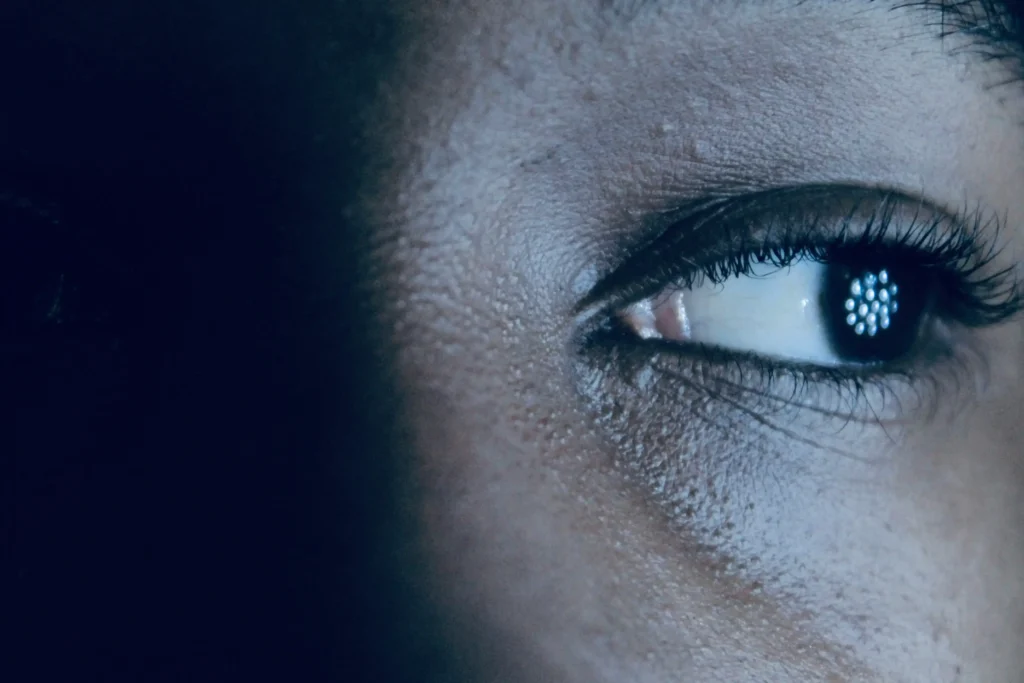
Have you ever noticed tiny flickering dots in your vision, almost like TV static? Some people see them more at night, while using their phones, or after spending long hours on a laptop. At first, many ignore these symptoms and think they are caused by stress, poor sleep, or weak eyesight. But sometimes, it could be a condition called Visual Snow Syndrome.
At JLR Eye Hospital, some patients describe it as moving grains or tiny blinking dots in front of their eyes. Because many people are not aware of this condition, they often feel confused or worried before getting the right diagnosis.
In this blog, we will explain what Visual Snow Syndrome is, its common symptoms, possible causes, and the treatment options available.
What is Visual Snow Syndrome?
Visual Snow Syndrome is when people constantly see small moving dots before their eyes. The dots may be black, white, translucent, or flashing. Many people say it looks similar to the static on old TV screens.
The dots that people see through Visual Snow Syndrome do not come up temporarily for a short while. Instead, they can be seen all day long.
When people search for what is Visual Snow Syndrome, they often think it is only an eye problem. But experts believe it is more connected to how the brain understands visual signals. This is why some patients have normal eye test results but still continue to see the symptoms.
Some individuals will find the syndrome harmless and wonât feel any difficulties in their daily activities. Others might have difficulty reading, driving at night, using phones or laptops for a long time, or staying focused for extended periods.
Common symptoms of Visual Snow Syndrome
People with Visual Snow Syndrome often describe seeing tiny flashing or moving dots across their vision, similar to old TV static. These dots may stay visible throughout the day.
Along with this, some people may also experience:
- Sensitivity to bright lights
- Trouble seeing properly at night
- Eye strain after long screen time
- Headaches or migraines
- Afterimages that remain even after looking away
- Light trails behind moving objects
- Ringing in the ears (tinnitus)
- Difficulty concentrating while reading
At JLR Eye Hospital, some patients have shared that their symptoms feel worse during stress, lack of sleep, or extended mobile and laptop use.
Students preparing for competitive exams, office workers, gamers, and IT professionals may notice these symptoms more often because they spend many hours looking at screens.
Possible causes and triggers of Visual Snow Syndrome
There is still no clear single reason why some people develop Visual Snow Syndrome. Still, doctors have noticed a few common patterns in many patients.
In many cases, the condition is linked more to how the brain processes vision than to a problem inside the eye itself.
Migraine and Brain Activity
Many people with Visual Snow Syndrome also have migraines, especially migraine with aura. Experts believe the condition may be linked to increased activity in the parts of the brain that handle vision.
Stress and anxiety
Stress does not directly cause this condition, but many people notice that the symptoms become more noticeable or feel worse during periods of stress. In todayâs lifestyle, long working hours, screen stress, and poor sleep can increase discomfort.
Long screen exposure
Many patients say the dots become more noticeable after spending long hours on screens.
Screens are not believed to be the actual cause of visual snow, they can increase eye strain and make the visual static more noticeable.
Sleep problems
Lack of sleep can also make symptoms stronger. Many patients say they notice more visual noise after sleeping late or not getting enough rest.
Head Injury
Sometimes, symptoms may start after a head injury. If the problem suddenly begins after an accident or injury, doctors may advise further checkups.
Certain Medicines or Substances
For some people, certain medicines or substances may increase visual symptoms or make them feel more noticeable.
Why proper diagnosis is important
One important thing about Visual Snow Syndrome is that its symptoms can look similar to other eye or brain-related problems.
These may include:
- Retinal problems
- Migraine with aura
- Optic nerve problems
- Other conditions that affect vision
This is why a proper eye checkup is very important.
At JLR Eye Hospital, detailed eye exams and retinal screening help doctors check whether the symptoms are caused by any serious eye disease or not.
Many people become worried after reading random information online. A proper checkup helps patients understand the actual cause of their symptoms and whether it is related to the eyes, migraine, or brain activity.
How doctors diagnose Visual Snow Syndrome
It is not easy to diagnose Visual Snow Syndrome with just one test. Physicians start the diagnosis with an eye examination and ask about the patientâs symptoms and medical history.
Some common questions may include:
- When did the symptoms start?
- Do you see the dots constantly or only at certain times?
- Do you suffer from migraines?
- Are your eyes sensitive to bright lights?
- Are the symptoms affecting your daily routine or work?
In many people, regular eye test reports come back normal. If needed, doctors may also suggest further tests or refer the patient to a neurologist to rule out other problems.
The ultimate purpose is to determine the exact cause of these symptoms and whether there is any other serious eye disease.
Visual snow treatment options
Right now, there is no permanent cure for Visual Snow Syndrome. But some treatments and lifestyle changes can help reduce symptoms and make daily life more comfortable.
The treatment depends on how severe the symptoms are and whether the person also has conditions like migraines or anxiety.
- Limiting screen time
- Managing Migraines
- Managing Stress
- Improving Sleep
- Tinted Glasses
- Neurological Medications
Conclusion
Visual Snow Syndrome is still not fully understood, so many people feel confused or worried when they first notice the symptoms. If you often see static-like dots, flashes, or other unusual changes in your vision, it is important not to ignore them. A proper eye check-up can help find the cause and rule out serious eye problems.
At JLR Eye Hospital, our experienced eye specialists in Kanpur use advanced technology to examine complex vision problems and guide patients toward the most suitable treatment. If you are experiencing symptoms of Visual Snow Syndrome or any unusual vision changes, you can book a consultation with our eye specialists for proper diagnosis and personalized care.
 Call Us Now
Leave a Reply