
When it comes to eye health, most people take it very lightly. We go for a basic vision test, read the chart, maybe update our glasses, and move on. But a regular eye exam can’t always show what’s happening deep inside your eyes. Some problems develop quietly, without pain or obvious signs. There is one test that is done, which is the Ocular Coherence Tomography (OCT) eye test. Many people don’t even know what it is until an eye doctor recommends it. Here in this blog, we will discuss what exactly an OCT test is, how it works, and why you should consider it.
What is an ocular coherence tomography eye test?
An OCT eye test gives your doctor a close, detailed view of the inner parts of your eyes. It takes pictures of the inside of your eyes, especially the retina. The retina is a thin layer at the back of your eye that captures light and helps you see everything, from the words on your phone to the colours around you.
While a normal eye exam only shows the outside view of the eye, an OCT scan shows the inside view, layer by layer. The test is quick, painless, and non-invasive.
It is similar to an ultrasound that looks inside the body, but instead of using sound waves, OCT uses light waves to capture detailed pictures. By looking at these images, the doctor can find problems early, sometimes even before symptoms appear.
Why is the OCT test important?
Many times, you don’t even realise something is going on inside your eyes. Everything feels normal, your vision seems fine, and you don’t notice any change. But deep inside, your eyes may be going through changes that you cannot see or feel.
OCT eye tests detect eye problems at an early stage, even before symptoms start. Here are the main conditions OCT can help find:
Glaucoma
Glaucoma happens when the pressure inside the eye gets too high. This pressure slowly damages the optic nerve (which sends signals from your eye to your brain). Glaucoma usually comes without pain, without redness, and without any warning signs. Many people don’t know they have it until their vision is already affected. If you face an issue, you can consult a Glaucoma Specialist for the best treatment.
Macular problems
The macula is the small central part of your retina that helps you see fine details like reading text, recognising faces or driving. If the macula has a problem, your central vision can become blurry. With an OCT scan, the doctor can clearly see the macula’s layers and detect issues like macular degeneration, age-related changes, macular swelling or macular holes.
Diabetic eye disease
If someone has diabetes, their eyes are at a higher risk of damage. High sugar levels can harm the tiny blood vessels inside the retina. OCT helps detect leaking blood vessels, fluid buildup, swelling in the retina and areas that are not getting enough oxygen.
Retinal changes over time
Your retina can change for many reasons. It may change due to ageing, eye injuries, surgeries, or ongoing eye conditions. OCT makes it easy for your doctor to compare your scans over months or years, track improvements or worsening, see how your eyes respond to treatment and notice even the smallest change. This tracking helps retina specialists to adjust your treatment and protect your eyesight in the long run.
How does the OCT eye test work?
If you feel like the OCT test sounds very complicated, you don’t need to worry at all. It is actually very easy and very quick. The process usually takes 5–10 minutes. Here are a few steps that usually happen:
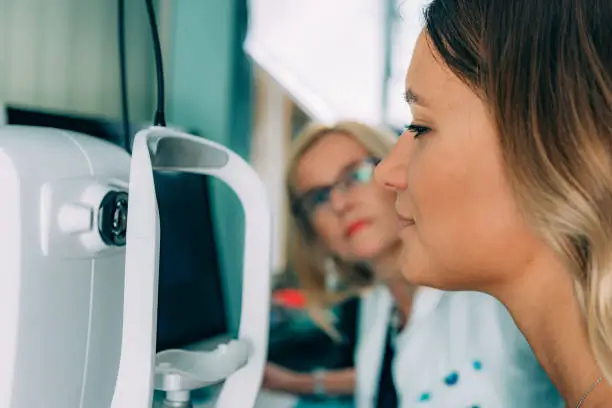
Step 1: You will be asked by the doctor to sit in front of the machine and place your chin on a small stand. It helps keep your head steady at one place.
Step 2: The beam of light scans your eyes. But you won’t feel anything, no pain will happen.
Step 3: Within seconds, the machine shows detailed images of your retina.
Step 4: At the end, your doctor will review the results and will explain the images, whether anything needs attention or not.
Who should get an OCT scan?
OCT is not only for older adults or people with eye diseases. Many doctors suggest it for groups who should consider it more seriously:
- Anyone above 40
- People with diabetes
- People with high eye pressure or glaucoma suspicion
- Individuals with a family history of retinal or optic nerve issues
Conclusion
Our eyes do so much every day, but we usually take them for granted. The Ocular Coherence Tomography (OCT) eye test is the most useful eye scan available today. It is quick and painless and helps you to detect early signs of eye problems that regular checkups can’t detect.
If you want trusted, expert eye care, Dr. Jawahar Lal Rohatgi Memorial Eye Hospital in Kanpur. Our eye specialists use advanced technology like the OCT eye test to check your eyes with accuracy and care. Book your appointment today and keep your vision safe and clear in the long run.
 Call Us Now
Leave a Reply